
Oh Aew
โอ้เอ๋ว
Oh Aew (โอ้เอ๋ว) is Phuket's most iconic traditional dessert, a refreshing Hokkien-Chinese shaved ice treat found almost exclusively in Phuket Old Town. The signature jelly is made from o-aew seeds — the seeds of the creeping fig plant (Ficus pumila var. awkeotsang). The seeds are soaked for about an hour, then mixed with banana juice (which neutralizes the seeds' natural odor) and calcium sulphate, and left to set for approximately 7 hours into a firm, translucent jelly. This jelly is cut into cubes and served over shaved ice with red beans, grass jelly (chao kuai), and palm sugar syrup. The dessert is closely related to Taiwan's aiyu jelly (愛玉), as both are derived from the same plant family. Oh Aew has been served in Phuket since at least the late 1800s, when Hokkien Chinese settlers arrived during the tin mining boom. Traditional stalls in Phuket Old Town still serve it from as little as 15 THB, making it one of the most affordable and authentic desserts on the island.
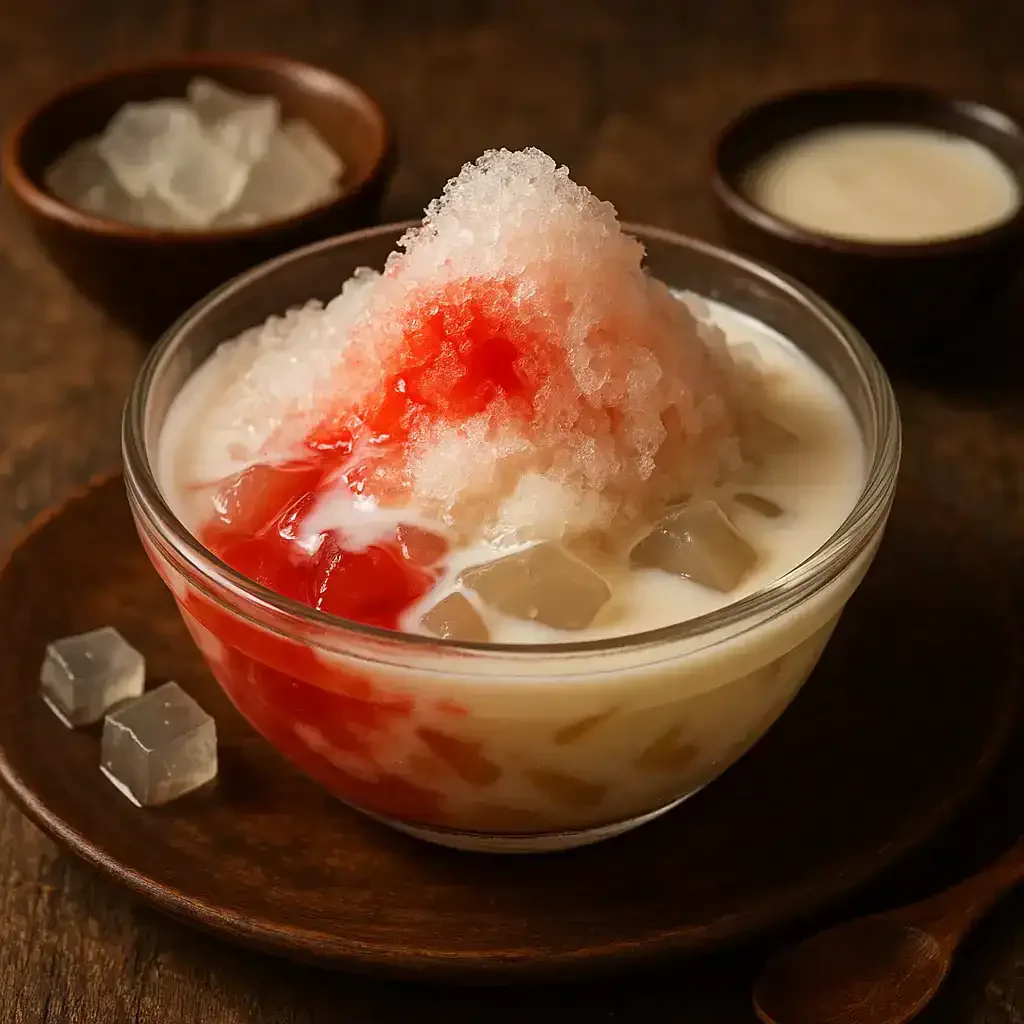
Ingredients
O-Aew Seed Jelly
The signature component — made from seeds of the creeping fig plant (Ficus pumila var. awkeotsang), soaked and set with calcium sulphate into a firm, translucent jelly
Substitutes: Aiyu jelly (Taiwanese equivalent from same plant family), Agar jelly (different texture, common outside Phuket)
Banana Juice
Mixed with the seeds during preparation to neutralize the natural odor of the o-aew seeds
Red Beans
Classic topping that adds texture and mild sweetness, reflecting Chinese dessert tradition
Substitutes: Black beans
Grass Jelly (Chao Kuai)
Dark, slightly bitter jelly that balances the sweetness and adds color contrast
Shaved Ice
Provides the cooling element and fluffy texture
Substitutes: Crushed ice (less fluffy)
Palm Sugar Syrup
Adds caramel-like sweetness; traditional Phuket stalls use locally made palm sugar
Substitutes: Simple syrup, Coconut sugar syrup
Cooking Method
Technique
Seed soaking, jelly setting with calcium sulphate, then assembling with shaved ice
Overview
Making Oh Aew is a time-intensive process. The o-aew seeds (from the creeping fig plant) are soaked in water for approximately 1 hour until they release a gel. The gel is then mixed with banana juice to neutralize the seeds' natural odor, and calcium sulphate is added as a setting agent. This mixture is left to set for approximately 7 hours until firm. The resulting translucent jelly is cut into cubes. To serve, the jelly cubes are placed in a bowl with shaved ice, red beans, grass jelly, and topped with palm sugar syrup.
Cooking Tips
- Soak seeds fully for at least 1 hour to release maximum gel
- Banana juice is essential to remove the seeds' unpleasant odor
- Calcium sulphate ratio must be precise — too much makes jelly rubbery
- Allow full 7 hours for setting; rushing produces weak jelly
- Shave ice just before serving for best texture
- Use natural food coloring from pandan or butterfly pea flowers for colored jelly variations
Want to learn from a Thai chef? Book a cooking class on Klook and master Oh Aew hands-on.
Cultural Significance
Origin Story
Oh Aew was introduced to Phuket by Hokkien Chinese settlers who arrived during the tin mining era in the mid-1800s. The name derives from the Hokkien word 'ò-giô' (薁蕘), referring to the creeping fig plant whose seeds are used to make the jelly. The dessert is closely related to Taiwan's aiyu jelly (愛玉冰), as both use seeds from the Ficus pumila family. Over generations, Phuket's version developed its own identity with the addition of local toppings like red beans and grass jelly.
Cultural Importance
Oh Aew is a living symbol of Phuket's Peranakan (Baba-Nyonya) heritage — the unique culture born from Chinese settlers intermarrying with local Thai and Malay communities. The dessert is almost impossible to find outside Phuket, making it a true regional specialty. It reflects the Hokkien Chinese culinary traditions that shaped Phuket Old Town's food culture, alongside other Hokkien-origin dishes like Hokkien mee and mee hun.
Traditional Occasions
Variations
Oh Aew Boran (Traditional)
The classic version with o-aew seed jelly, red beans, grass jelly, shaved ice, and palm sugar syrup. Found at traditional stalls like Oh Ew Paelee.
Oh Aew Nam Kathi
Version with added coconut milk or coconut cream for extra richness, popular at some market stalls.
Oh Aew Modern/Creative
Cafe-style versions with added toppings like taro, sweet potato, or fruit. Found at modern cafes like Cafe'in near Thai Hua Museum.
Quick Info
Where to Find
Best Restaurants
- • Oh Ew Paelee (โอ้เอ๋ว แป๊ะหลี) — Thanon Dibuk, Soi Soon Uthit, Phuket Old Town (15 THB)
- • Cafe'in — 24 Krabi Road, near Thai Hua Museum, Phuket Old Town (40-80 THB)
- • Lock Tien Food Court — Dibuk Road intersection, Phuket Old Town (15-30 THB)
- • Cham Cha Market — Ranong Road, Phuket Old Town (15-25 THB)
Street Food Areas
- • Phuket Old Town (Thalang Road, Dibuk Road, Krabi Road)
- • Sunday Walking Street Market (Thalang Road)
- • Lock Tien Food Court area
Price Ranges
Join a food tour to discover the best Oh Aew spots with a local guide.
Nutritional Info
100-180 calories (varies by toppings)
- • Low in fat (traditional version without coconut milk)
- • Hydrating in hot weather
- • O-aew seed jelly is high in dietary fiber
Experience
Book a Thai Cooking Class
Learn to cook authentic Thai dishes with expert local chefs — from street food favorites to royal Thai cuisine
We may earn a commission when you book through our links, at no extra cost to you. This helps us keep Go2Thailand running.
Explore More
Explore More Thai Cuisine
Discover more authentic Thai dishes and their stories
Browse All Dishes