
Green Curry
แกงเขียวหวาน
Green Curry (Gaeng Keow Wan) is Thai cuisine's emerald jewel - a coconut curry that perfectly balances creamy richness with herbaceous heat. Unlike its red and yellow cousins, green curry gets its color and flavor from fresh green chilies and herbs, making it bright, aromatic, and surprisingly complex. The name literally means 'sweet green curry' but don't be fooled - it packs serious heat.
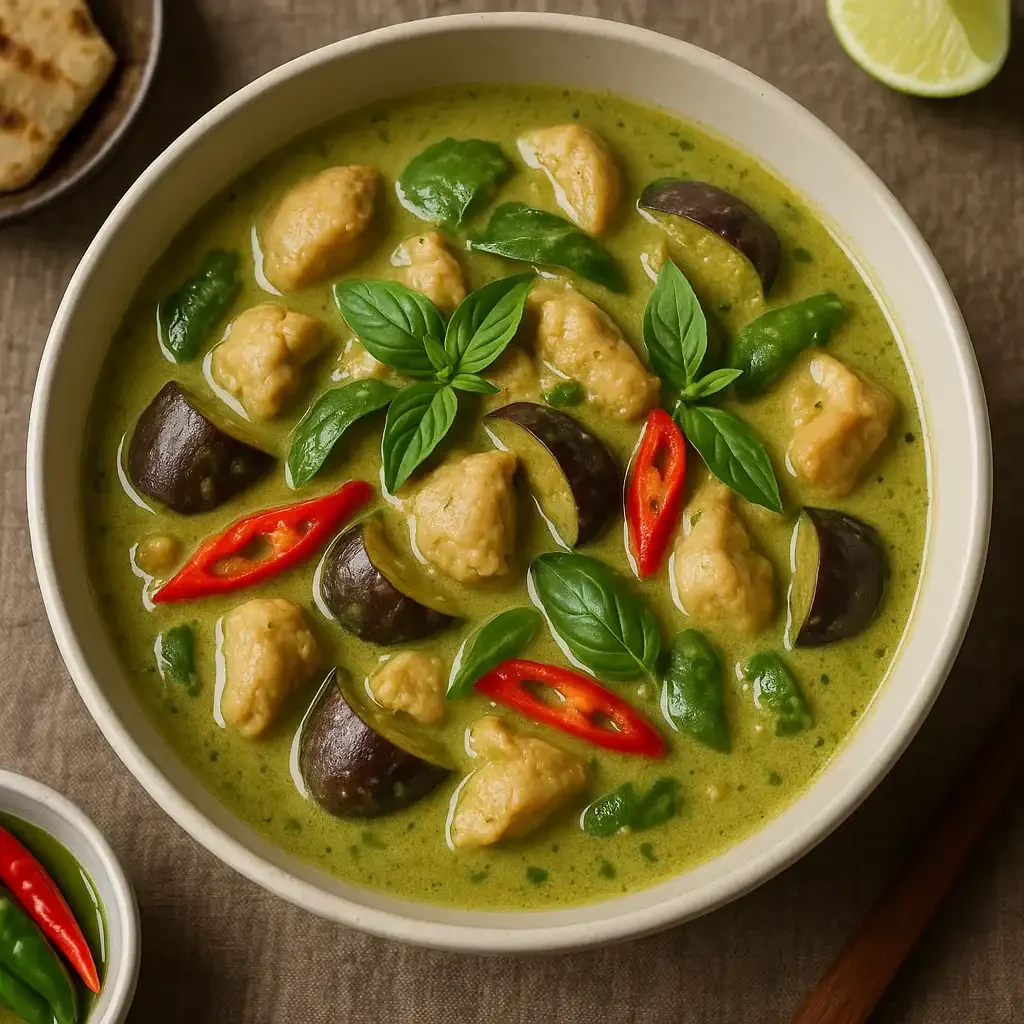
Green curry (gaeng khiao wan) gets its color from fresh green chilies pounded into the paste — not food coloring. It's typically the spiciest of Thailand's major curries, though sweetness from coconut milk tempers the heat. Thai basil, pea eggplant, and bamboo shoots are classic additions, with chicken being the most common protein. The curry paste itself requires a mortar and pestle and serious arm strength — commercial pastes are convenient but lack the freshness of hand-pounded versions. In Thailand, green curry is an everyday lunch dish, not a special occasion meal.
Ingredients
Green Curry Paste
The soul of the dish - fresh herbs and chilies ground together
Substitutes: Store-bought paste (Mae Ploy brand), Make from scratch (best option)
Thai Eggplant
Adds texture and absorbs the curry flavors
Substitutes: Regular eggplant cut smaller, Zucchini, Green beans
Thai Basil
Fresh aromatic finish that brightens the rich curry
Substitutes: Sweet basil, Holy basil, Mint (different but works)
Coconut Cream
Creates the rich base and tempers the heat
Substitutes: Full-fat coconut milk, Cashew cream for lighter version
Cooking Method
Technique
Paste frying and slow simmering
Overview
The secret is 'cracking' the coconut cream - heating it until the oil separates, then frying the curry paste in this oil. This blooming process is crucial for developing deep flavors before adding liquids.
Cooking Tips
- Fry curry paste until incredibly fragrant - this is key
- Use the thick part of coconut milk first
- Don't boil vigorously - gentle simmer preserves color
- Add vegetables by cooking time - hardest first
- Finish with basil off the heat
Cultural Significance
Origin Story
Developed in Central Thailand's royal kitchens, green curry represents the sophistication of palace cuisine. The use of fresh herbs instead of dried spices shows the abundance of Thailand's herbs.
Cultural Importance
Green curry is a test of a cook's skill - balancing heat, sweetness, and salt while maintaining the bright green color. It's considered more refined than red curry and is often served at important dinners.
Traditional Occasions
Variations
Gaeng Keow Wan Gai
Classic chicken version with Thai eggplant
Gaeng Keow Wan Luk Chin Pla
Fish ball version - popular street food variant
Vegetarian Green Curry
With tofu and mixed vegetables, no fish sauce
Quick Info
Where to Find
Best Restaurants
- • Krua Apsorn (Bangkok) - Royal Thai cuisine
- • The Local (Bangkok) - Traditional recipes
- • Any Muslim-Thai restaurant for unique versions
Street Food Areas
- • Or Tor Kor Market food court
- • Saphan Phut night market
- • University canteens for cheap authentic versions
Price Ranges
Nutritional Info
Varies by preparation
- • Rich in Thai herbs and spices
- • Balanced flavors
More Dishes
Related Dishes
Want to Learn Thai Cooking?
Master Green Curry and other Thai dishes with hands-on cooking classes and guided food tours.
We may earn a commission at no extra cost to you. Prices shown are from partner sites.
Regional Cuisine
Green Curry is a Central Thailand Dish
Discover more dishes and travel experiences from this region.
Explore More
Explore More Thai Cuisine
Discover more authentic Thai dishes and their stories
Browse All Dishes