
Mango Sticky Rice
ข้าวเหนียวมะม่วง
Khao Niao Mamuang (Mango Sticky Rice) is Thailand's most beloved dessert - a seemingly simple combination that achieves perfection through quality ingredients and precise technique. Sweet coconut-dressed sticky rice paired with perfectly ripe mango creates a harmony of flavors and textures that captures the essence of Thai desserts: not too sweet, naturally flavored, and seasonally dependent.
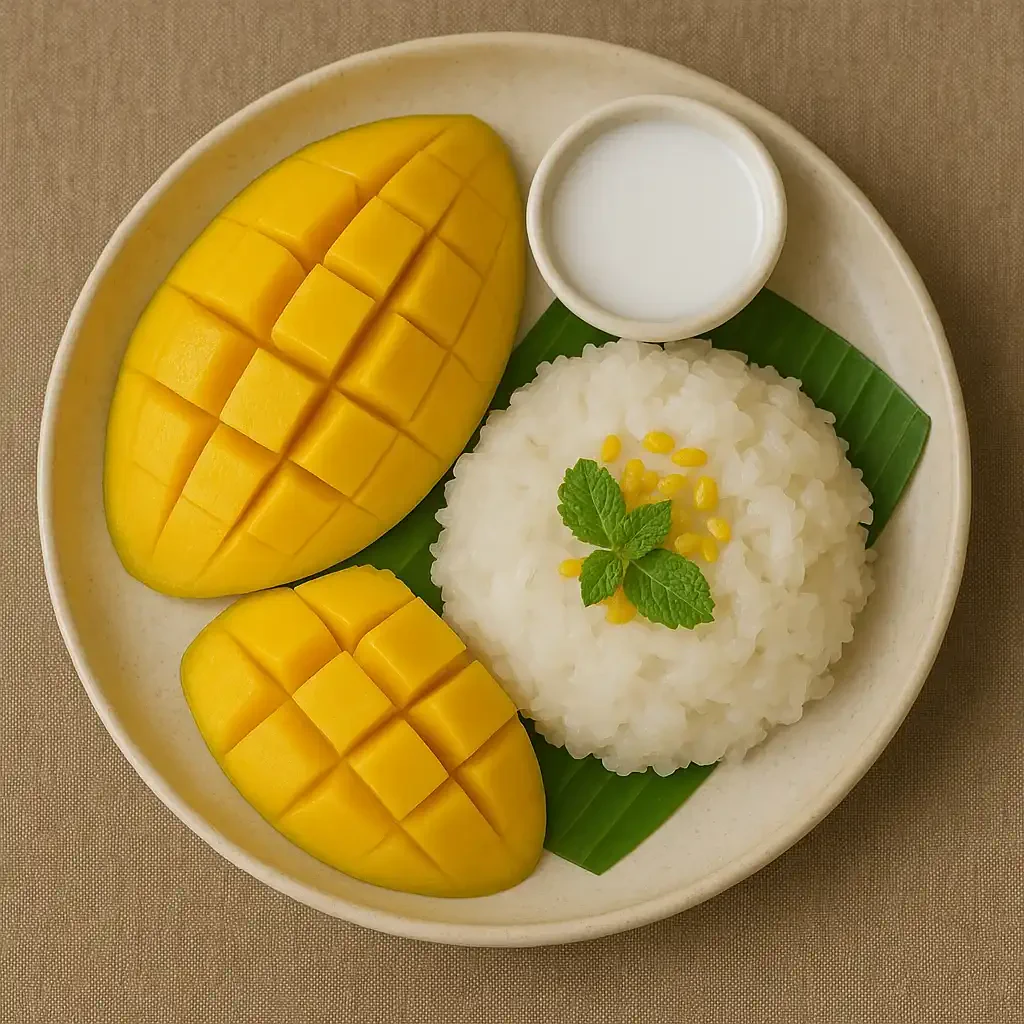
Mango sticky rice (khao niao mamuang) is Thailand's most beloved dessert — and it's entirely seasonal. The dish only works with ripe Nam Dok Mai mangoes, which peak from April through June. Outside those months, you'll find it everywhere but the mangoes won't have that intense, perfumed sweetness that makes the dish special. The sticky rice is steamed, then soaked in sweetened coconut milk until it becomes glossy and slightly salty-sweet. Topped with sliced mango and a drizzle of coconut cream, it's simple, perfect, and proof that Thai desserts deserve far more attention than they receive.
Ingredients
Nam Dok Mai Mango
The premium Thai mango variety - sweet, smooth, and fiberless
Substitutes: Ok Rong mango, Ataulfo mango, Any ripe, sweet mango
Glutinous Rice
Special sticky rice that becomes creamy when cooked
Substitutes: No real substitute - regular rice won't work, Japanese mochi rice (different texture)
Coconut Cream
Rich topping that brings everything together
Substitutes: Thick coconut milk, Cashew cream for lighter version
Cooking Method
Technique
Steaming and careful timing
Overview
Sticky rice is soaked overnight then steamed in bamboo baskets. While warm, it's mixed with sweetened coconut milk, absorbing the flavors. The mango must be at perfect ripeness - firm enough to slice but sweet and aromatic.
Cooking Tips
- Soak rice for at least 8 hours - overnight is best
- Steam in bamboo for authentic flavor
- Mix coconut sauce while rice is still warm
- Choose mangoes that smell sweet at the stem
- Serve at room temperature, not cold
Cultural Significance
Origin Story
Originated in the royal courts where the best mangoes were reserved for nobility. The dish celebrates mango season (April-May), coinciding with Thai New Year (Songkran).
Cultural Importance
This dessert represents Thai agricultural abundance and the importance of seasonality. It's one of the few Thai dishes that hasn't been adapted or available year-round - you eat it when mangoes are ready.
Traditional Occasions
Variations
Khao Niao Thurian
Durian version - for hardcore fruit lovers
Khao Niao Dam
Made with black sticky rice - nuttier flavor
Khao Niao Moon
With additional pandan-flavored custard
Quick Info
Where to Find
Best Restaurants
- • Mae Varee (Bangkok) - Most famous mango sticky rice shop
- • Kor Panich (Bangkok) - Since 1947
- • After You Dessert Cafe - Modern interpretation
Street Food Areas
- • Thonglor Street vendors (April-June)
- • Chatuchak Weekend Market
- • Any fresh market during mango season
Price Ranges
Nutritional Info
Varies by preparation
- • Rich in Thai herbs and spices
- • Balanced flavors
More Dishes
Related Dishes
Where to Try Mango Sticky Rice
These cities are known for their mango sticky rice. Explore local food scenes and restaurants.
Regional Cuisine
Mango Sticky Rice is a Central Thailand Dish
Discover more dishes and travel experiences from this region.
Explore More
Explore More Thai Cuisine
Discover more authentic Thai dishes and their stories
Browse All Dishes