
Lod Chong
ลอดช่อง
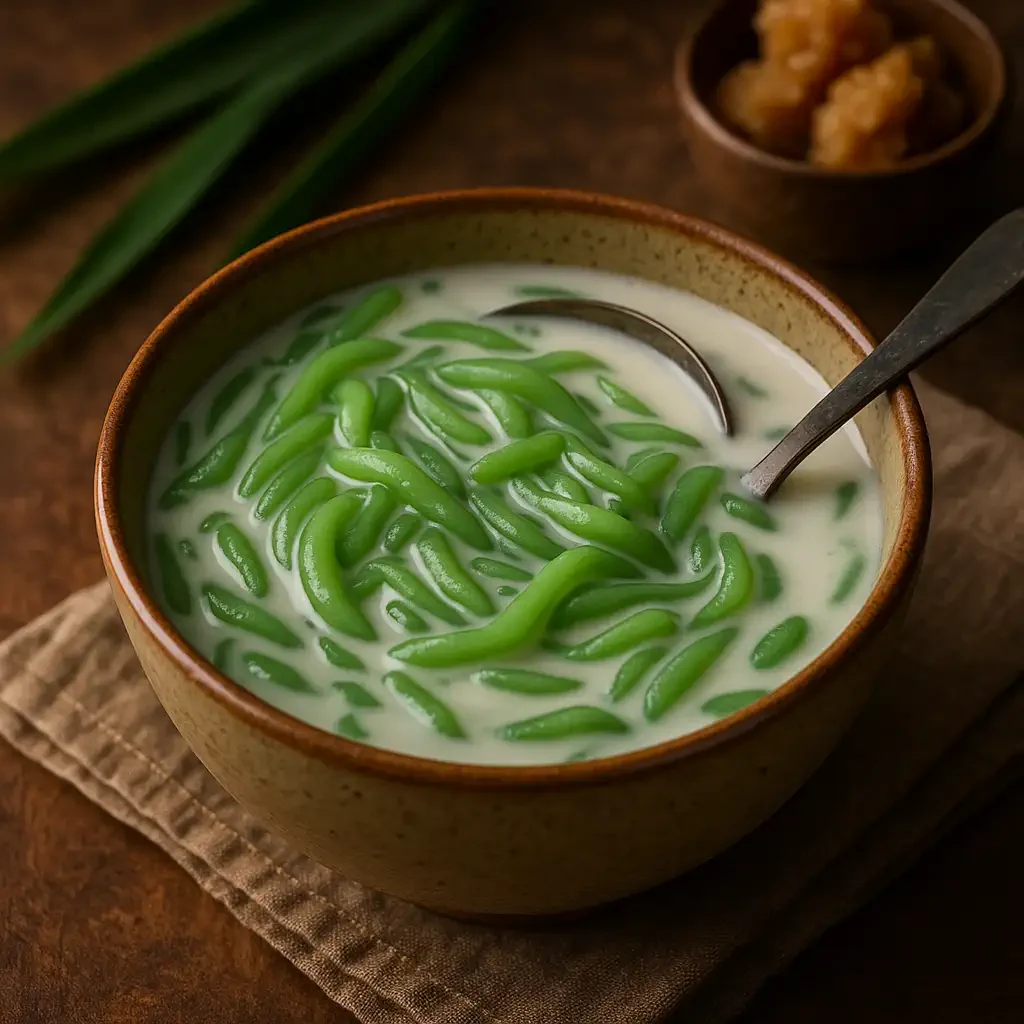
Lod Chong (ลอดช่อง) is one of Thailand's oldest desserts, with roots tracing back to King Narai's reign (1672-1688 CE). The name literally means 'gone through a hole,' referring to the traditional method of pressing pandan-infused rice flour dough through a sieve into cold water, forming the signature green jelly noodles. These bright green strands are served in sweetened coconut milk with crushed ice, creating a refreshing dessert that costs as little as 30 THB from street vendors. An earlier form called 'nokploi' was part of Hindu and Brahmanical food traditions in Southeast Asia. Lod Chong is part of the traditional Thai 'four-cup dessert set' and holds special significance in Thai weddings, where its green color symbolizes parrots — representing fidelity — and the dessert itself symbolizes enduring love. The dish is related to Malaysian/Singaporean cendol, Indonesian dawet, and Vietnamese banh lot, forming a shared dessert tradition across Southeast Asia.
Ingredients
Rice flour
Forms the base of the jelly noodles, giving them their chewy texture
Substitutes: Tapioca starch (for a softer texture), Mung bean starch
Pandan juice
Provides the signature green color and fragrant aroma
Substitutes: Pandan extract (concentrated, use less), Pandan paste (available in Asian grocery stores)
Coconut milk
The sweet, creamy base in which the noodles are served
Substitutes: Canned coconut milk (full-fat preferred), Coconut cream diluted with water
Palm sugar
Sweetens the coconut milk with a distinctive caramel flavor
Substitutes: Coconut sugar, Brown sugar (less authentic but works)
Cooking Method
Technique
Pressing through sieve into cold water
Overview
Mix rice flour with pandan juice to form a green dough, then cook it until it becomes a thick paste. Press the hot dough through a sieve or mold with holes into a bowl of cold water — this is the 'lod chong' (gone through a hole) technique that gives the dessert its name. The cold water sets the jelly noodles into their characteristic shape. Separately prepare sweetened coconut milk with a pinch of salt. Serve the green noodles in the coconut milk with crushed ice.
Cooking Tips
- Use fresh pandan leaves for the brightest green color and best aroma
- Keep the cold water very cold (add ice) to set the noodles quickly
- Press the dough through the sieve steadily for uniform noodle size
- Add a pinch of salt to the coconut milk to enhance the sweetness
Want to learn from a Thai chef? Book a cooking class on Klook and master Lod Chong hands-on.
Cultural Significance
Origin Story
Lod Chong dates back to King Narai's reign (1672-1688 CE), making it one of Thailand's oldest documented desserts. An earlier form called 'nokploi' was part of Hindu and Brahmanical food traditions in the region. The name 'lod chong' means 'gone through a hole,' describing the technique of pressing dough through a sieve into cold water to form the jelly noodles. It appeared in the traditional Thai 'four-cup dessert set' served at royal ceremonies.
Cultural Importance
Lod Chong holds deep symbolic meaning in Thai culture, particularly in weddings. The green pandan color represents parrots, which in Thai tradition signify fidelity, while the dessert itself symbolizes enduring love. It is part of a broader Southeast Asian dessert family that includes Malaysian/Singaporean cendol, Indonesian dawet, and Vietnamese banh lot — all sharing the concept of pressed jelly noodles in sweet coconut milk.
Traditional Occasions
Variations
Standard Thai Lod Chong
Green pandan jelly noodles in sweetened coconut milk with crushed ice. The most common version found throughout Thailand.
Phetchaburi Style
Palm sugar is poured over the top rather than mixed in, creating distinctive caramel notes. Phetchaburi is famous for its premium palm sugar.
Cendol (Malaysia/Singapore)
Adapted to hawker culture with gula melaka (palm sugar syrup), red beans, and sometimes corn. A national favorite in both countries.
Dawet (Indonesia)
Multiple regional varieties exist across Indonesia. Often uses coconut sugar and can include jackfruit or other local additions.
Banh Lot (Vietnam)
Vietnamese adaptation with pandan jelly noodles in coconut milk, part of the shared Southeast Asian dessert tradition.
Quick Info
Where to Find
Best Restaurants
- • Local southern Thai restaurants
- • Authentic street food stalls
- • Traditional markets
- • Family-run eateries
Street Food Areas
- • Night markets
- • Morning fresh markets
- • Local food courts
Price Ranges
Join a food tour to discover the best Lod Chong spots with a local guide.
Nutritional Info
200-300 calories
- • Pandan has natural calming and aromatic properties
- • Coconut milk provides healthy fats
- • Naturally gluten-free dessert
More Dishes
Related Dishes
Experience
Book a Thai Cooking Class
Learn to cook authentic Thai dishes with expert local chefs — from street food favorites to royal Thai cuisine
We may earn a commission when you book through our links, at no extra cost to you. This helps us keep Go2Thailand running.
Explore More
Explore More Thai Cuisine
Discover more authentic Thai dishes and their stories
Browse All Dishes